
The Roman Empire—But Also Medieval Europe
It is December, 98 AD. Decius stands on a watchtower shivering in the cold. Below him, the Danube River has completely frozen over with ice so thick a legion of cavalry could march over it. Beyond the frontier lie whatever mysteries the Act of the Gods has left in its wake. His old neighbours are gone; whoever the new people are, there appear to be fewer of them. That’s good, Decius thinks to himself, thanking Fortuna that he does not have to deal with men encased from head to toe in mail, riding horses and striking with the wrath of Mars with lance and sword that the garrisons on the Rhine frontier have to live with now.
Just then, Decius sees movement on the horizon. He squints, struggling to bring it into focus. Yes, something is coming his way. Many somethings, in fact. Decius sounds the alarm; the men in the small fort below him rush to their battle stations. As the horsemen on the horizon get closer, they speed up. Eventually breaking into a gallop, they run over the ice and loose arrows at Decius, but luckily his armour and shield keep him safe. Behind the horsemen come archers on foot, who soon arrive. They bring braziers and light them up. Each man holds his arrow to the brazier before knocking it, taking aim, and loosing them at the Roman fort. The foot archers loose arrow after arrow; each one burns brightly by the time it lands in the fort. They embed themselves in walls and on rooftops, threatening to set the fort aflame. Romans desperately run to and fro splashing water or casting snow on the flames, but the arrows keep coming and coming, and Decius’s comrades cannot douse every flame. Soon, the fire spreads and engulfs the fort. As the foundations of the watchtower ignite, Decius can see that the enemy’s horde has only just begun to arrive. Column after column of men on horseback and on foot come into view and begin marching over the ice and past the fort, occasionally glancing up at the inferno and smiling at the sounds of Decius’s comrades screaming from the midst of the flames.
Follow me on Bluesky for updates (with teasers!):
Or subscribe to my newsletter to get updates via email:
To escape a fiery death, Decius leaps from his watchtower into the snow outside the walls. With the snow breaking his fall, he manages not to break any bones and simply lies still, hoping the enemy marching past have not seen him fall and will not notice him lying still and silent at the bottom of the snowdrift. No one comes to fetch him, so he lies there until every one of the enemies have passed on by before he gets up, brushes off the snow, and waves his arms and legs to get the feeling back into them. Finally, Decius hurries off to the nearest fort to bring the news. Though he does not know their name, the Golden Horde has arrived.
…
Time has passed, and the initial shock of the Act of the Gods has worn off, although some people in parts of the Roman Empire far from the Rhine and Danube still don’t entirely believe what they’ve been told. Trajan Augustus, in order to compensate for the disaster at the Battle of Linter, reinforces the Rhine frontier by pulling troops from elsewhere. ‘Elsewhere’ includes Britannia, which is always short of troops to keep the unruly tribes inside the province under the Roman heel and to defend its own frontiers; however, Trajan considers Britannia to be an extremely low priority, so he pulls one full legion away along with elements of the the other two still stationed there. He also pulls legionaries and auxiliaries away from the Danube frontier, which has been relatively quiet. He has heard of the ongoing civil war in Hungary and decides this means the Hungarians will be unable to launch any large operations against Rome in the near future, while further down the Danube only a few small raiding parties have been encountered, but nothing serious.

And so it is that the defences of Moesia Inferior, along the lower Danube, have been weakened just before the critical moment. That very winter, before the new year, the rumbling of hooves can be heard from across the frozen river.
On the other side lies the Golden Horde, ruled by Batu Khan from his seat of power in the city of Sarai, along the Volga River. Grandson of Genghis Khan, Batu is the veteran of a hundred campaigns and a thousand battles. Most notable of these are his invasions of Volga Bulgaria, the Rus’ Principalities, and Central Europe in the 1230s and ’40s. In 1241, he reluctantly turned away from the conquest of Europe only because the death of Ögedei Khan required him to attend the Kurultai far, far to the east on the other end of the steppe.
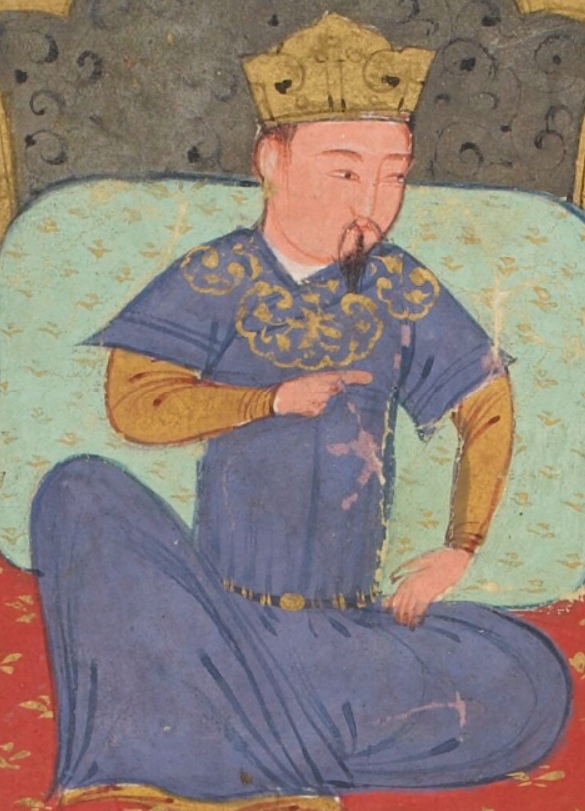
Now, the Act of God did not affect Batu’s personal realm a great deal. The Golden Horde was already split in two parts, east and west. The eastern portion lay mostly east of the Ural Mountains, and it is gone, but Batu’s personal territory in the west has not been touched. In place of the eastern Golden Horde are a new group of peoples, most notably the Alans and Manceri. Batu calls a regional kurultai of his own to discuss matters with the notables in his realm and proceeds to send out spies and diplomats to ascertain the identities and dispositions of his new neighbours.
After a cursory scouting of the Roman defences across the Danube, Batu decides a larger operation is in order. Batu is old and in poor health and a relatively minor operation like this one is beneath him anyway, so he sends his son Sartaq to lead the excursion, along with a relative by the name of Nogai. Batu furnishes them with 10,000 men and sends them on the warpath. Soon afterward, our man Decius had his brush with Mongol horse-archers and foot-archers equipped with fire arrows. Romans were no strangers to fire arrows, but the Mongols had access to a kind of fire arrows the Romans could not dream of, and one which would soon come into use.
Crossing just to the east of Kuhurluy Lake, the Mongols quickly sack the nearby frontier towns of Noviodunum and Aegyssus, both of which are fortified, but under-manned. The populations are put in chains and made to carry the loot the Mongols seized as the army moves on, setting the towns ablaze and leaving them in their wake. Troesmis comes next, but as a major legionary base it holds out a little longer—just long enough that a relief column from Durostorum arrives under the command of the legate of Legio XI Claudia with elements of two legions and several auxiliary cohorts.
The Battle of Troesmis ensues. Mongol horse-archers repeatedly charge the Romans loosing arrows and rattling nerves as they approach before suddenly turning on their heels and sprinting away, loosing arrows again. As the Romans advance, they come under fire from a new weapon they have never encountered before; rockets. These rockets come in the form of arrows packed into handheld wooden frames referred to by their Chinese handlers as beehives. Each beehive contains thirty or even sixty rocket arrows. Men carrying beehives stand, bedecked in heavy armour, in the front ranks of the Golden Horde’s infantry, their weapons totally unfamiliar and unpredictable to Roman eyes as the legionaries and auxiliaries advance. Matches are held to fuses, and hundreds of rockets spew forth out of the beehives, squealing as they tear through the air, a barrage of arrows thicker than any other. Some Romans are protected by armour and shields, but others are struck in the arms, legs, and faces. Many are wounded, some fatally so.
Infantry from Kyiv, Chernihiv, Pereyaslavl, and other Rus’ cities advance, pressing spear against Roman shield. Mongol horse-archers drive off the Roman cavalry as Mongol lancers and Rus’ boyars move up. Battered, demoralised, and threatened by heavy cavalry on their flanks, the Romans attempt to withdraw. Even though they take heavy casualties, they hold together… for a time. Suffering a deadly rain of arrows interrupted occasionally by heavy cavalry charges, the Romans are unable to hold their formation together. Soon, the Mongols and boyars exploit gaps in the lines and the Roman formation falls apart altogether. Every man seeks to save his own life while the cavalry ride among and between them, reaping a deadly harvest.
Our man Decius, first Roman to see the Mongol army, is killed the pursuit.
Soon afterward, Troesmis falls and is sacked by the Mongols. Sartaq and Nogai decide to make an example of the fortress by building a pyramid of skulls in its courtyard, taken from the defenders and those who fell trying to relieve it.
In the following two months, the Mongols burn many more Roman forts, most of which are abandoned when they arrive. Then they turn toward the coast and travel down its length all the way to Odessus. The Black Sea cities all pay tribute to avoid being sacked. Finally, in February, Sartaq and Nogai decide they have done enough damage and are tired of camping in tents in the cold. They cross back over the Danube, taking a rich bounty of captives and loot with them.

The Romans will do what they can to rebuild, but they will not be at all prepared when, in June, 99 AD, Sartaq and Nogai return, each at the head of an 8,000-man raiding force, and again devastate the lower Danube region. This time, all the forts up to Durostorum are burned and all the settlements pillaged except for the walled cities along the Black Sea coast.
But the Romans have only just begun to see what the Mongols are capable of.
[Next]

 Lord of Lore
Leave a comment