The Roman Empire—But Also Medieval Europe
It is June, 101 AD. Wenceslaus I, King of Bohemia and Emperor-Elect of Rome, had wracked his brain for months trying to think of a method of taking down William without moving against him directly. So far, his best idea was to have his son Ottokar campaign across the Danube river in the Heathen Province of Rhaetia, and thus build up some cache as a crusader to match the popularity of William. This won’t allow him to move against William, however. A provocation is needed. Something that could not be interpreted as a direct attack against William, but which would goad the latter into making the first move so that Wenceslaus could claim self-defence. And, at last, he comes upon the solution. While meeting with Wilbrand of Kasernberg, prince-archbishop of Magdeburg, the fact of Wenceslaus’s lack of a coronation is brought up. They discuss how long it’s going to take to select a new pope, with both agreeing it might be years still. Then Wilbrand let slip that he’d be willing to perform the coronation in absence of a pope. Suddenly, everything clicked together. Wenceslaus would be crowned King of the Romans, and he’d be crowned in Frankfurt, close enough to William’s area of operations that the man would be unable to turn down the opportunity to strike at Wenceslaus.
Once at home, Wenceslaus prepares an army of 5,000 men and departs for Frankfurt. At every town and castle he passes on the way, the king all but shouts from the rooftops that his target is Frankfurt, where he is going to be crowned by Wilbrand. Word of his plans reach William, as he knows they must, around the time that Wenceslaus reaches Frankfurt, where he finds the city gates barred against his entry. Frankfurt has grown to such a size and influence that it effectively rules itself the same way a free and imperial city would. However, Frankfurt does not hold the legal status of a free city, but is instead a territorial city, which means it’s subject to a lord. In this case, that lord is the emperor—which, according to Wenceslaus, is Wenceslaus himself. But Frankfurt has been playing fast and loose with its loyalties thus far. While the city allowed the electors to select Wenceslaus as emperor within its walls, it has also been supporting William’s military campaigns. Indeed, a detachment of the city’s militia are serving in William’s army at this very moment.
Follow me on Bluesky for updates (with teasers!):
Or subscribe to my newsletter to get updates via email:
Allowing a coronation to take place in the city, however, would be a highly provocative move and would tie the city’s fate to the monarch so crowned, whether Frankfurters like it or not. When Wenceslaus approaches the city walls asking for the gates to be opened, the city fathers tell him that he can’t be crowned here, since tradition dictates that the emperor should be crowned in Aachen. Wenceslaus gave the pragmatic reply that Aachen does not exist, so he might as well be crowned in the same city where he was elected. However, the city fathers insist that they need time to think about it.
While Wenceslaus patiently awaits their reply, he has his men surround the city, tightly controlling who comes and goes, and begins building ladders, a siege tower, and a ram in full view of the defenders. Manning the walls, the city militia fear that with a large detachment on campaign with William, they stand no chance against the Bohemian army. No one gives them any orders, so they simply stand on the wall and watch as the instruments of their doom are constructed before their very eyes.
A week passes. The council is still in deadlock over whether or not they really want to tie themselves to Wenceslaus. At last, as his siege engines near completion, Wenceslaus approaches the walls as second time with an offer. If the city fathers let his army in and allow the coronation to proceed without hampering it, Wenceslaus will confer the full rights of a free city upon Frankfurt. As an added bonus, he won’t even allow his troops to loot the city or demand any ransom from it. At last, the city fathers relent, opening the gates and allowing Wenceslaus to occupy the city.
It’s at this point that Wilbrand shows up in Frankfurt wanting to know why in the name of Heaven Wenceslaus has been going around telling everyone that Wilbrand is going to crown him when Wilbrand had promised no such thing—he had only suggested doing it in a private conversation. Wenceslaus calms Wilbrand’s nerves and then makes him an offer the archbishop can’t refuse; go through with the coronation and Wenceslaus will use all his influence as emperor to get Wilbrand selected as pope and have Magdeburg made the new papal seat. Wilbrand agrees.
Then Wenceslaus prepares to greet William upon the road. Prince Ottokar lies in wait with 3,000 men in a forest by the road between Wiesbaden and Frankfurt, a road that William must surely use.
William of Holland, meanwhile, rushes to get to Frankfurt before it’s too late. In his haste, he leaves behind most of his army—most of them joined up to fight heathens and have no desire to get involved in the Williamite-Wenceslausian rivalry anyway. Taking only his own men from Holland along with the Frankfurt contingent and a few others, he hurries to cross the Rhine near Wiesbaden and then takes the road to Frankfurt. There, upon the road, he is set upon by Ottokar and his men. In a short, sharp clash, William and his retinue are killed and the rest of his army flees the scene. Ottokar presents William’s body to his father, who spares a moment to look it over approvingly before sending out official invitations for all the princes of the realm to attend his coronation.
Princes, clergymen, and city council members from all over the Holy Roman Empire answer the invitation and converge upon Frankfurt to pay their due respects. Despite so many grand dignitaries in attendance, the coronation is a rather modest one as far as these things go, seeing as it was called more or less on the spur of the moment without a lot of planning going into it.
Meanwhile, William of Holland’s body is escorted back to Holland by a group of Bohemian knights along with an invitation to the coronation. Floris, William’s brother and now count of Holland, bites his tongue and attends the coronation, where he makes a public display of swearing his loyalty to Emperor Wenceslaus.
Another guest at the coronation is none other than Hadrian, the rising star at the court of Trajan Augustus. Hadrian relays Trajan’s congratulations to Wenceslaus on his victory over his rival William, but pointedly does not congratulate Wenceslaus on his coronation and is also conspicuously absent for the crowning ceremony itself. No credence is to be given to the notion that this barbarian king is, in any sense, a ruler over Rome or Romans.
Despite these slights, Wenceslaus is not especially interested in pursuing war against Heathen Rome, so he agrees to abide by the pace made by William: Trajan will refrain from persecution of Christians and Wenceslaus will restrain the princes on his side of the Rhine and Danube from attacking the Heathens. A formal peace treaty will be signed by a negotiating party assigned by the newly-crowned emperor. William’s negotiators, led by Bishop Henry of Utrecht, disband and head home upon news of their patron’s demise. Henry gets back to Utrecht to find that, at the instigation of Wenceslaus, the people of Utrecht have deposed him and appointed a new bishop in his place. So it goes with all the former supporters of William; all are wooed to Wenceslaus’s side or removed from concerns.
While still riding high on his coronation, Emperor Wenceslaus I is struck ill and dies that September. His son Ottokar succeeds him as King of Bohemia and is elected as emperor the following month, after which he holds his own, much more lavish coronation in November. Ottokar recalls his father’s peace negotiators before an agreement has been reached, and offers no promises of peace. Neither, however, does he actively pursue hostile actions. A tense atmosphere falls over the frontier. The First War of the Two Romes comes to its end balancing in a precarious situation that cannot be described as peace, yet neither is it war, all resting upon the word of peace given by dead men.
[Next]
Credits
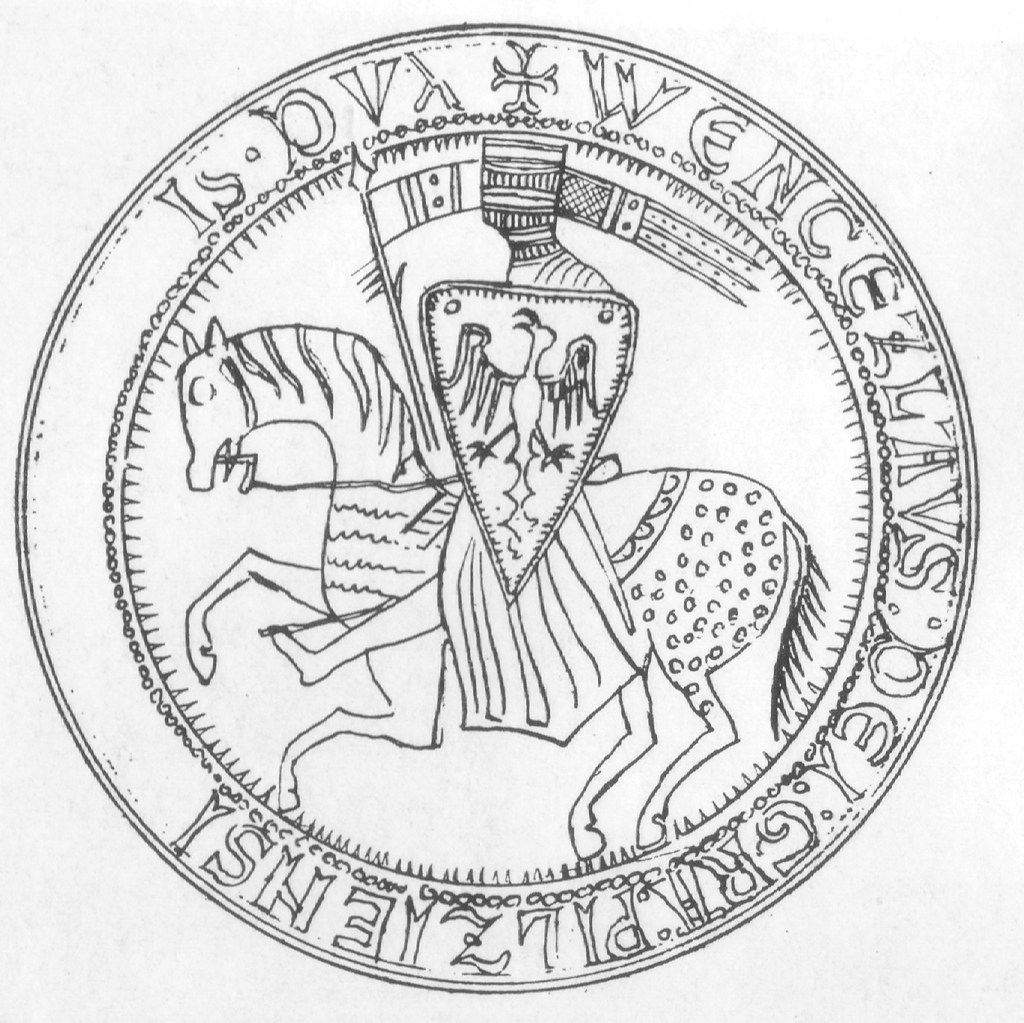
Royal seal of Wenceslaus I is via Wikipedia
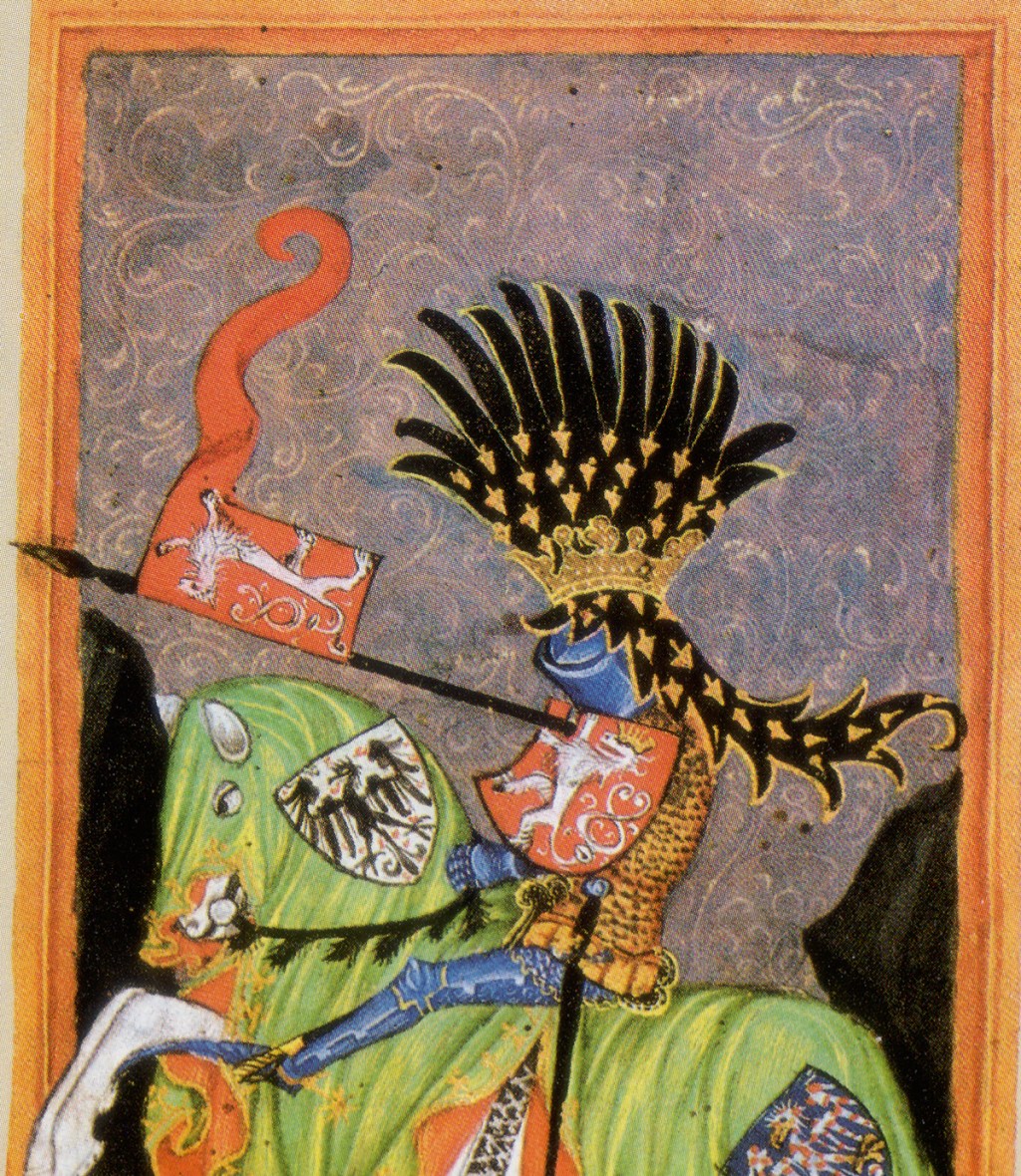
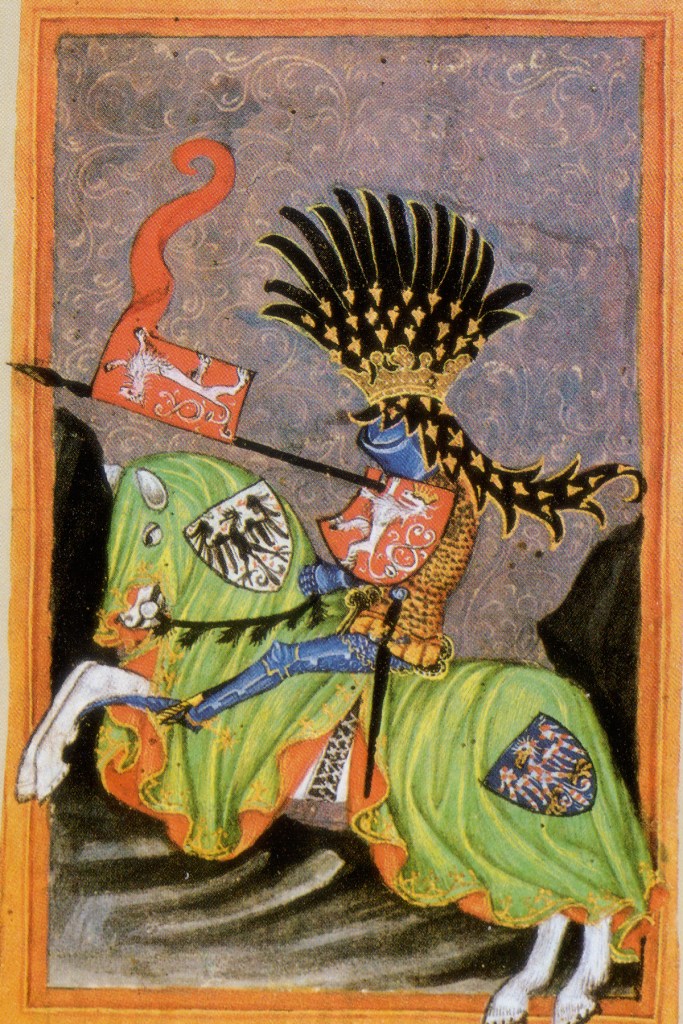
Portrait of Wenceslaus I on horseback is via Wikipedia

 Lord of Lore


Leave a comment