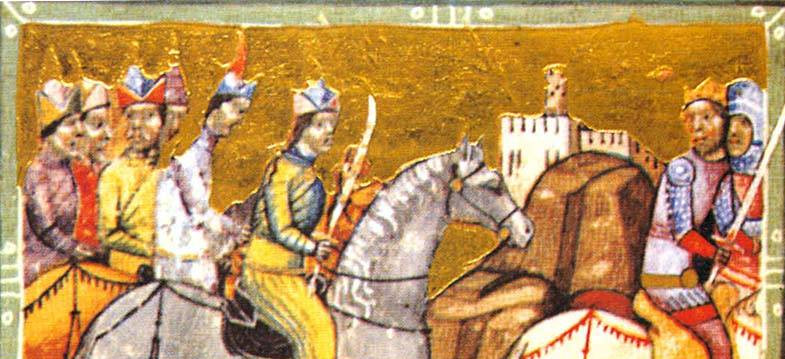
The Roman Empire—But Also Medieval Europe
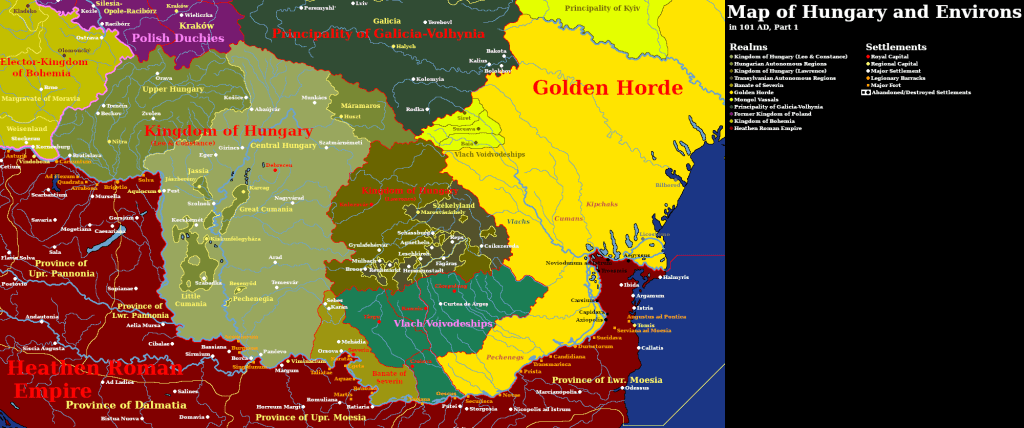
It is May, 101 AD, and the Mongols are on the march.
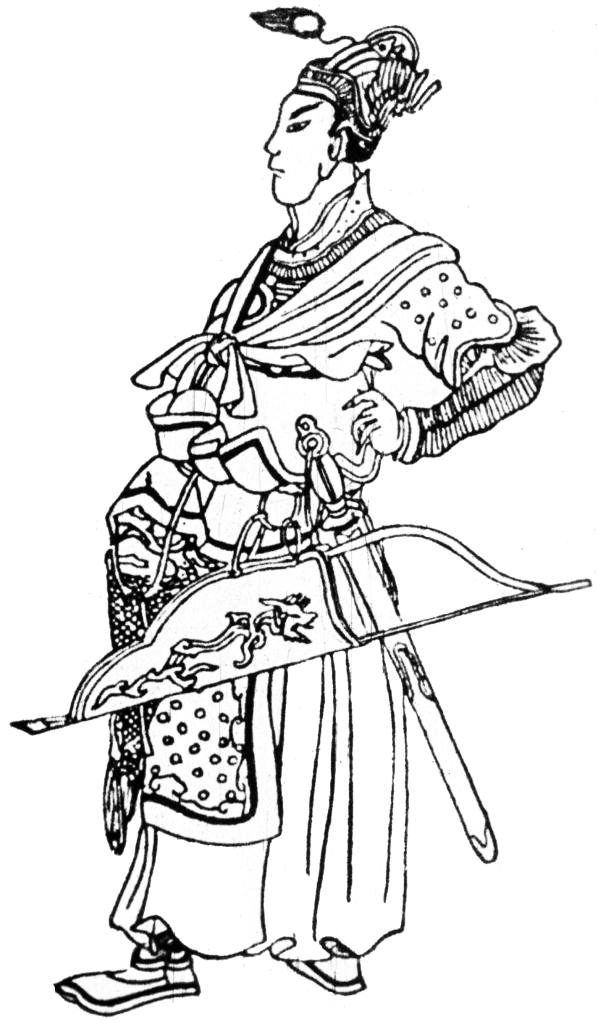
Batu Khan isn’t just another Mongol ruler. He is the grandson of Genghis Khan and is old enough to have known the conqueror personally. He gained his military credentials fighting in the army of Ögedei as the latter completed the conquest of the Jin Dynasty in northern China. With his own two hands, he tore down the Cuman-Kipchak Confederacy and smashed the Kyivan Rus’, building the Golden Horde on their corpses. His crowning moment would’ve been the conquest of Central Europe and, he believes, he had come close to achieving that dream—only to have it snatched away by the untimely death of Ögedei, which forced Batu to travel all the way to Mongolia to attend the kurultai to select a new khan.
Follow me on Bluesky for updates (with teasers!):
Or subscribe to my newsletter to get updates via email:
Ever since his aborted invasion of Central Europe in 1241-2, Batu Khan has bided his time, consolidating his realm on the Pontic Steppe and building his capital city, Sarai, atop the old western capital of the Cuman-Kipchak realm, all while bringing the princes of the former Kyivan Rus’ realm under his suzerainty. But Batu never forgot about Central Europe, and he always dreamed of going back.
Today, that dream becomes a reality. Batu Khan has marshalled all the might of the Golden Horde and has compelled the Rus’ to march with him. Ten thousand men are placed under the command of Batu’s son Sartaq, with another 10,000 each under Batu’s brother Berke and his nephew Nogai. Batu Khan personally commands 20,000 Mongol troops and an additional 10,000 Rus’ and other vassal troops. An elaborate plan is concocted by Batu and his generals, requiring each the three commanders of 10,000 to launch a different expedition in support of Batu’s main force.
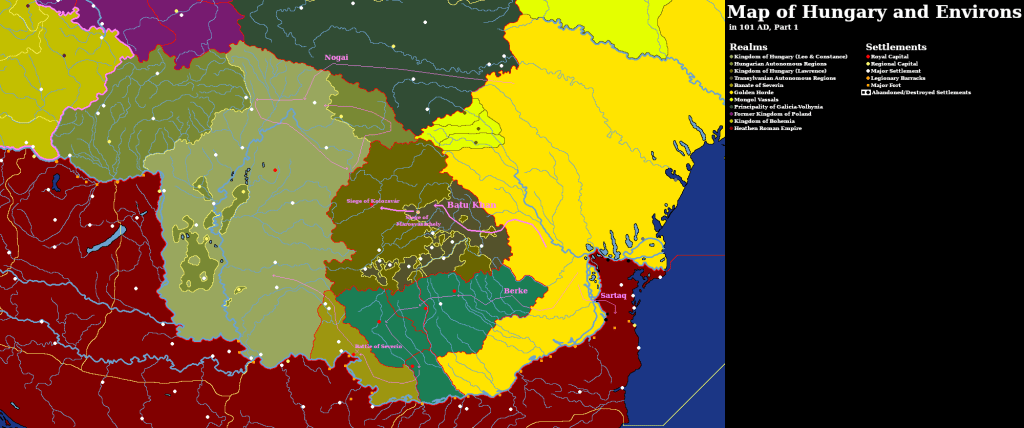
First, Sartaq takes his men across the Danube into Lower Moesia to distract the Romans. We’ll put his story on hold for now, however
Berke moves south of the Carpathian Mountains and ascends into the territory of the Vlach Voivodeships by the many tributaries of the Danube that spring from the Carpathians. Vlachs are a semi-nomadic people who are difficult to pin down in one place except where they built the occasional fortress to retreat to in times of emergency. Berke finds they put up almost no resistance, leaving him to pillage and ravage all the lands around their forts while they watch from the ramparts. Rather than engage in a series of costly sieges, Berke demands their capitulation and, one after the other, all of them offer their submission. Berke takes hostages for good behaviour, sending them to Sarai, and continues to the Banate of Severin.
Severin is an autonomous border province of the Kingdom of Hungary ruled by Stephen Csák, who was appointed by the old King Béla IV. Csák refuses to recognise either of the feuding, self-proclaimed kings to the north and has remained steadfastly neutral in the Hungarian civil war thus far. He cannot claim to be neutral to 10,000 Mongols on his lawn, however. Berke ravages all the countryside around the capital city of Severin, compelling Ban Csák to come out and fight him. Csák’s army is crushed and the ban himself killed. Severin quickly offers submission and a huge ransom in exchange for sparing the city further bloodshed. Berke accepts the offer and continues around the Carpathians, entering Central Hungary from the south in early July.
Nogai, meanwhile, is sent into Galicia-Volhynia, which is ruled by Prince Daniel, father of King Leo of Hungary. Daniel is a vassal of the Golden Horde, but such a relationship is often precarious. Fearing that the Mongols have come to collect tribute by force of arms, Daniel musters his army. Before he can finish doing that, however, Nogai has already bypassed Daniel’s border castles, swept aside what meagre resistance is in his way, and entered Central Hungary from the north. Daniel decides to to finish mustering his army and follow them, marching in support of his son against his Mongol suzerain.
Once in Hungary, Nogai embarks upon a lightning-fast campaign of terror and destruction across northern Hungary from Košice to the border of Transylvania. His force, consisting entirely of cavalry, does not stop in any one place for long, avoids fortified towns and castles, and does not weigh itself down with too much loot or too many captives. Everyone who gets in their way is killed and everything they don’t need to take with them is destroyed.
King Leo musters an army and attempts to fight Nogai, but Nogai refuses to face him battle. Small detachments of Mongol cavalry harass Leo, inflicting some casualties but occasionally being caught and destroyed by combined squadrons of Hungarian knights and Leo’s Cuman allies. Nogai’s main force, however, always stays just out of reach.
As all of this is going on, Batu Khan crosses the Carpathian Mountains and enters Transylvania from the east, ending up in the autonomous border province of Székelyland. Lawrence Kan, self-proclaimed King of Hungary and rival to Leo, panics at the news of the Mongol invasion. Wasting no time, he calls upon every man capable of wielding a spear or bow to take up arms and join the royal army, or the closest noble or city militia, or form small peasant bands to resist the invaders. Every knight, every peasant levy, and every urban miliaman is summoned to their muster points and given standing orders to find the Mongols and fight the Mongols anywhere and everywhere they march.
As Lawrence contemplates the coming destruction of his realm, Batu Khan scatters the border defences and ravages the countryside until he reaches the Székely capital of Marosvásárhely and besieges it. Marosvásárhely is a well-fortified city defended by a branch of the Hungarian people called the Székelys. The Székelys are hardened frontier people who have guarded Hungary’s borders for centuries. They know how to wage war against the Mongols and their ilk. They fought the Mongols the last time they came to Hungary, and their grandfathers fought the Cumans before anyone had ever heard the name of Genghis Khan.
What they are not prepared for is the long bronze tube mounted on a wooden frame dragged into place outside their fortifications by a group of Chinese siege engineers. The Székelys watch as the Chinese pour a prodigious amount of black powder into the gaping maw of the beast, then roll a large, round rock into its ravenous belly. A fire is lit in the back of the beast’s throat, then the deafening roar of an enraged beast rends the atmosphere and the rock is flung through the air, slamming into Marosvásárhely’s wall, shaking it to its foundation. Concocted by masters of dark arts in the Far East and belched out into the world by Satan himself, the cannon has made its debut appearance on the European battlefield.
Over the course of the next hour, shot after shot is fired by Europe’s only cannon into the wall of the Székely capital until a great big hole has been blasted into it. Finally, Batu sends his troops into the breach. Rus’ infantry lead the charge, and the Mongols carry the day. Before sunset, Marosvásárhely’s defenders are all dead or hiding in cellars from the victors as they loot the city. All the city’s people are enslaved and the city itself is set ablaze.
Slowed by loot and captives, Batu’s army makes its way toward the Transylvanian capital of Kolozsvár, pillaging everything within reach as they move. Along the way, what’s left of the Székely army attacks Mongol scouts and foraging parties, but nothing can stop Batu’s advance.
A few weeks after the sacking of Marosvásárhely, Batu reaches Kolozsvár. Lawrence is in the south gathering reinforcements, but the commander of the city’s garrison offers submission and eternal, unquestioning loyalty on Lawrence’s behalf. Batu, however, is in no mood for tribute. He’s here to make a point. Hoping for reinforcements from southern Transylvania, especially the German colonies down there, the garrison holds out in Kolozsvár for three weeks. Batu’s cannon blasts several holes in the walls, but the defenders fight off the Rus’ attackers and fill the holes with barricades.
One day, after three weeks of brutal see-saw fighting between besiegers and besieged, the defenders see Batu Khan lead the bulk of the Mongol cavalry out of the camp, seemingly on a major foraging mission. Later that day, the hoped-for reinforcements finally arrive on the horizon, led by King Lawrence Kan. Seeing this, the defenders’ hearts soar and they raise a thunderous cheer from atop the battlements. With the Mongol cavalry gone, victory is assured!
That’s what they tell themselves. And so it seems, as the reinforcements launch themselves against the fortified Mongol camp, defended by Rus’ infantrymen, and the Kolozsvár garrison sallies forth and attacks the camp at the same time from the other side. It seems, indeed, that Batu’s Rus’ vassals will be crushed under the combined weight of two armies attacking from opposite sides and Transylvania will be saved. But looks can be deceiving.
From behind a nearby hill, concealed from both the city’s defenders and the newly-arrived reinforcements, Batu emerges with his cavalry. Wasting no time, they break into a gallop and charge into the flank and rear of the reinforcing army. Caught completely by surprise, the reinforcements collapse almost instantly. While the Mongols chase down the fleeing southerners, the Rus’ turn their full attention to the garrison. Seeing their reinforcements routed, the garrison attempts to withdraw behind the safety of their walls, but the Rus’ pursue them closely. Once more, they attack the barricades in the breaches made by Batu’s cannon, and this time they overwhelm the defenders. By the time Batu returns late in the evening from pursuing the routing southerners, he finds the city has fallen to his troops.
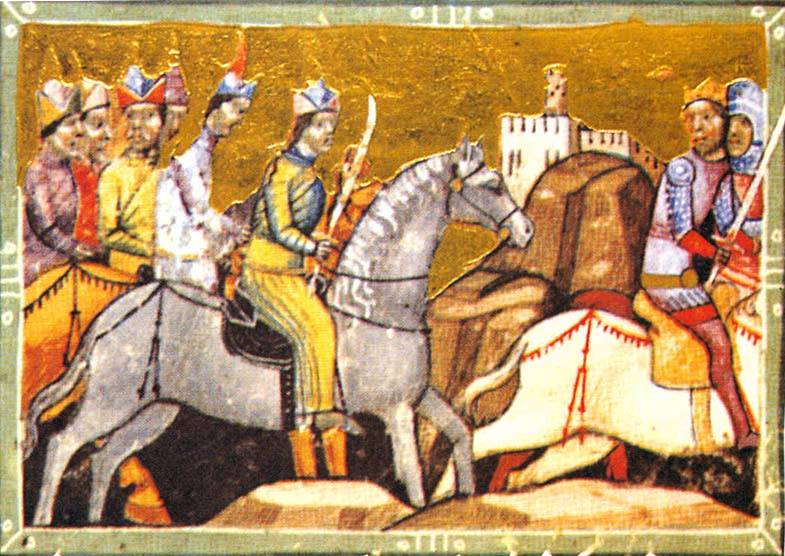
It turns out, of course, that Mongol scouts are no slouches. They’d spotted the reinforcements days ago and warned Batu, who hatched a cunning plan to utterly crush all opposition.
Kolozsvár is sacked, its inhabitants put to the sword, and their skulls piled high outside the walls. King Lawrence Kan, who was captured attempting to escape with the last of his knights, is beheaded and his skull is turned into a drinking cup.
[Next]
Credits:
Batu Khan in China Via Wikipedia
Bela IV chased by Mongols Via Wikipedia

 Lord of Lore


Leave a comment