The Roman Empire—But Also Medieval Europe
It is May, 102 AD, and Batu Khan has returned to Sarai, where he has unfinished business to take care of. During the 101-102 campaign, Batu’s nephew Nogai turned northward into Galicia-Volhynia while Batu and Berke went into Pannonia. The reason for this is because Batu wanted Nogai to punish Daniel for trying to help Leo when Nogai invaded Hungary. From September until January, Nogai was doing just that; ravaging the countryside of Galicia-Volhynia while avoiding fortified cities and Daniel’s field army. Nogai was eventually defeated near the Dniester River, but he escaped with light casualties and retained most of his loot. Now, Batu summons Prince Daniel and King Leo to come and see him to reaffirm their loyalties. While he’s at it, he also summons the leaders of Transylvania, Severin, and the Vlach Voivodeships.
While Daniel and Leo are en route, Batu falls ill and takes to bed. Fighting hard and sleeping in army camps has taken a severe toll on the khan’s health, and there are serious concerns that he’s going to die. Sartaq goes to Sarai so as to be in the capital of his father should die, while Berke and Nogai each consolidate their followers and start making moves toward ensuring support for their own bids to become khan. After struggling with illness for a month, Batu Khan finally dies at the approximate age of forty-eight.
Tip me on Ko-Fi: https://ko-fi.com/lordoflore
Follow me on Bluesky for updates (with teasers!): @lord-of-lore.bsky.social
Or subscribe to my newsletter to get updates via email:
A kurultai is called to elect a new khan. All members of the Borijigin Dynasty (Genghis Khan’s family), including those married into it, and all the major Mongol military commanders converge on Sarai.
Dating back to some point in the pre-Mongol period, Sarai was the capital of the Cuman-Kipchak Confederation before it was conquered by Batu. Batu rebuilt the city in his own image. The inner city is composed of adobe-walled buildings with a relatively small permanent population while the outer city is composed of a maze of tents inhabited by transient nomads who are just passing through. As a result, the city’s population changes a great deal over the year, as it peaks in winter (when nomads cull their herds and come to the city to weather the weather) and drops dramatically in the summer (when nomads go out onto the steppe to graze their herds).
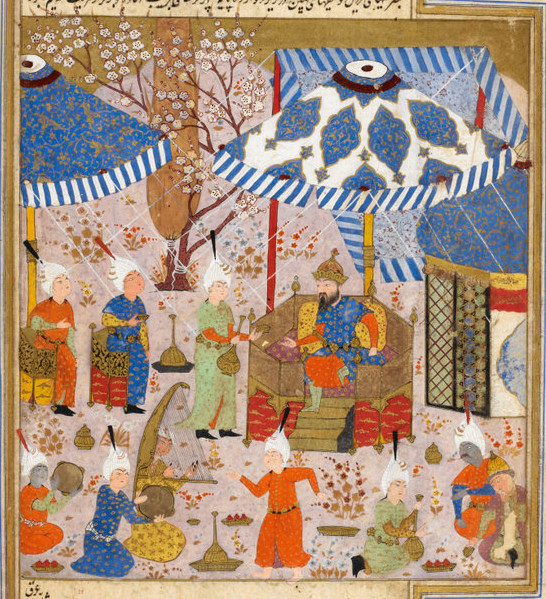
To accommodate the kurultai, a huge tent is erected, big enough for all the Mongol electors to sit in a great circle to discuss, debate, and argue the succession. For two full months, the arguing continues. Many candidates put themselves forward, but most are of little note. One by one, they drop out of the running and pledge their support for one of the other candidates. Eventually, only three are left; Sartaq, Berke, and Nogai. Sartaq and Berke are neck in neck, while Nogai is a distant third. Tensions simmer and all three men call thousands of their followers into Sarai to back them up. Only a spark is needed to ignite the powder keg.
In late July, as nomads plumb the parched steppe in search of grass for their herds, Sartaq is attacked one night in the palace by a group of would-be assassins. Though they manage to wound him, his guards kill most of them and take a few prisoners. Under interrogation, the prisoners reveal Berke is behind the plot. Sartaq attempts to quietly arrest Berke, but Berke interprets this as a counter-assassination and fights back. Before anyone knows what’s happening, the streets of Sarai break out into a civil war between the followers of Sartaq and those of Berke while Nogai’s supporters watch in confusion. Nogai knows he can’t stay neutral for long, so he quickly sides with Sartaq.
Berke and his supporters are driven from the city after five days’ brutal street-fighting. Gathering some 100,000 followers, Berke heads east. Sartaq and Nogai follow and catch up to him on the open steppe near the northwestern shores of the Caspian Sea. Several days of skirmishing follow as Berke tries to outrun his pursuers while they clash with his rear guard. Finally, he makes a stand. The battle lasts a full day as Mongols run circles around each other, using the same tactics of continuous arrow-fire and feigned retreats on each other as they use on settled peoples. Sartaq’s men use a feigned retreat to try and draw out some of Berke’s men, but they don’t take the bait. Then, in the late afternoon, some of Berke’s men use a feigned retreat on Nogai’s men, drawing a portion of them away only to wheel around and strike, scattering them.
Casualties are high on both sides, but at the end of the day Sartaq and Nogai withdraw. Berke uses the cover of night to force-march his exhausted warriors with tens of thousands of civilians in tow. They escape eastward, and Sartaq decides against further pursuit.
Crossing the Ural River, Berke finds himself in lands that are both familiar and unfamiliar at one and the same time. Located in the gap between the Ural Mountains and the Caspian Sea, Berke has left Europe behind and now stands in Asia. Berke has traversed these lands before. Born in far-off Mongolia, Berke marched west with the army of the united Mongol Empire onto the Pontic Steppe, the lands of the Rus’, and into Central Europe. Up until the Act of God, the lands east of the Ural River had been part of the Golden Horde, organised into a subdivision called the White Horde, which had its own capital and its own khan subject to Batu.
Now, however, the White Horde is gone and in their place is, strangely enough, a group of people called the Alans. This is rather odd because the Mongols already conquered a group of people called the Alans, but those Alans live in the northern Caucasus Mountains. These ancient Alans are, indeed, the forebears of the Caucasian Alans, but the 1152 years of development separating them means that the two have almost nothing in common. Even their dialects are unintelligible to each other despite being (technically) the same language.
Denied the title of khan and having left the land of his birth far, far behind, Berke decides to forge a new path for himself. Besides the ancient Alans, a menagerie of other steppe groups also live in the lands that (from Berke’s perspective) were previously occupied by the White Horde. None of them are prepared to deal with a Mongol invasion.
Berke summons a kurultai consisting of just his own followers. They proclaim him khan, and he declares the re-founding of the White Horde, with himself as its ruler. These “interlopers”, he says, are squatting on land won by Mongol arms. They will either submit to their rightful rulers or be destroyed. Thenceforth, he goes on a campaign of conquest to reclaim all the lands belonging to the White Horde. Over the following decade, Berke conquers a swathe of territory east of the Ural River up to the Altai Mountains, where he encounters a powerful confederation who are a step above the other nomads in the area. They call themselves the Huns. Beaten back, Berke turns southward and enters a prolonged conflict with the Kushan Empire over the region of Transoxiana, in which he becomes an ally of the Arsacid Empire.
But we’ll not concern ourselves with the details of all of that. Let us returned to Sartaq and Nogai. After Berke’s escape, the two men return to Sarai. With everyone who stood for Berke gone and Nogai now supporting Sartaq, the son of Batu is selected as the new khan almost by default. However, he scoffs at the lowly title of a mere khan. Now that years have passed and they’re well and truly certain that the Mongol Empire doesn’t exist yet, Sartaq suggests that the leader of the Golden Horde ought not be a humble khan, but a mighty khagan. To the Turks and Mongols, a khagan is as elevated above a khan as an emperor is over a king. The kurultai agrees, and so everyone swears loyalty to Sartaq Khagan.
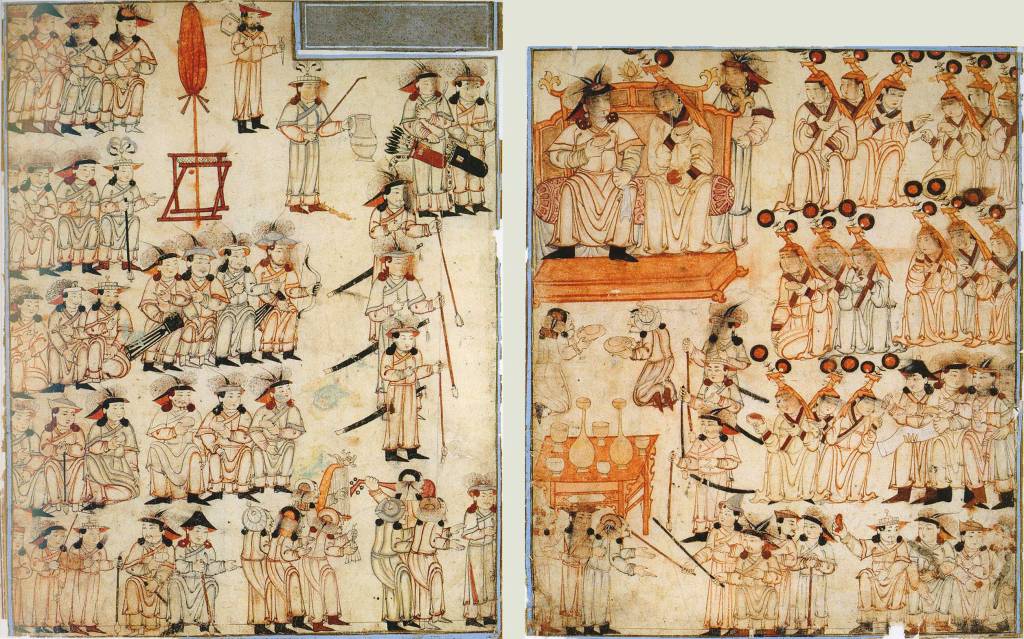
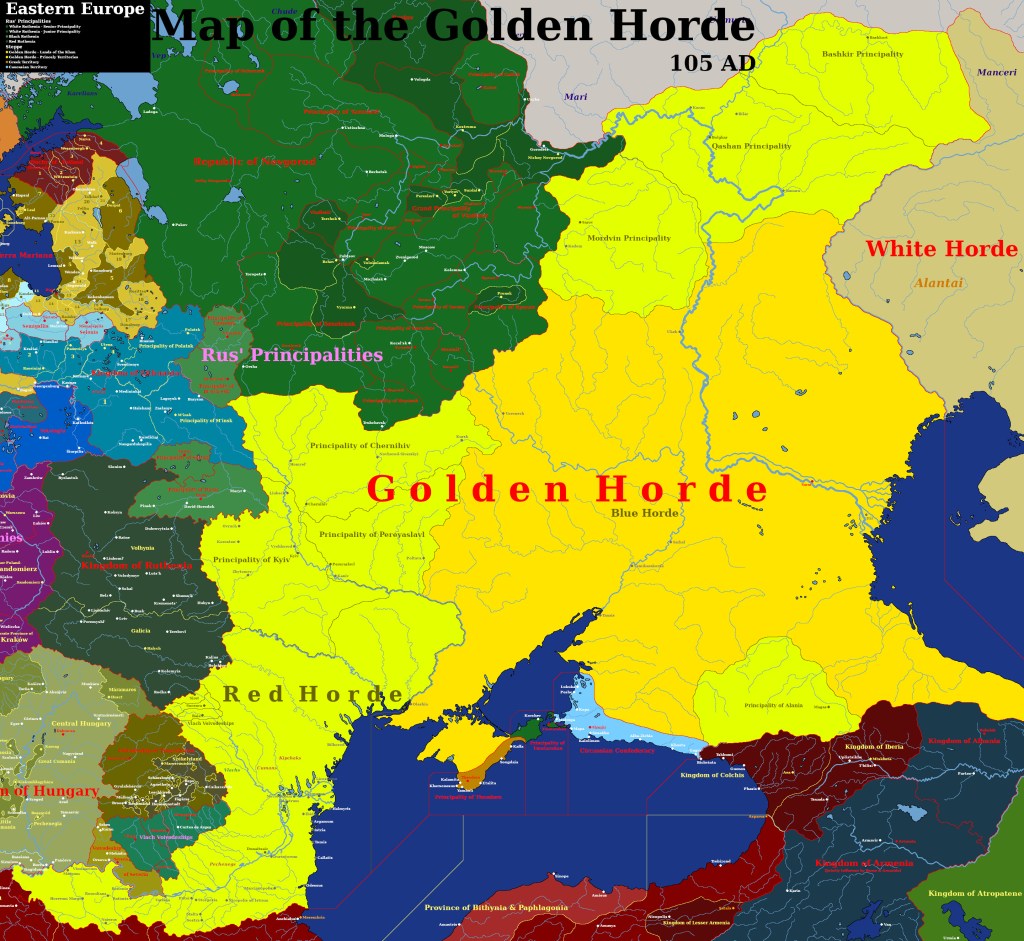
Once his own position is secure, Sartaq splits off the western segment of the Golden Horde; everything west of the Dnieper River (including the recently-conquered Moesia) will now be the Red Horde, a subdivision of the Golden Horde. Nogai is selected as its khan as reward for supporting Sartaq.
Leaving the security of the border with Rome to Nogai, Sartaq focuses on keeping the Rus’ principalities on a tighter leash. Under his father, Sartaq was the primary intermediary between the Rus’ and the khan, and he also shares their religion (albeit not their sect of Ruthenian Orthodoxy; Sartaq is a Nestorian Christian), so he deftly uses these connections to pit Rus’ princes against each other, playing up Rus’-on-Rus’ rivalries and increasing their dependence on him. He even starts attending Easter and Christmas services held in Kyiv by the metropolitan bishop so as to appeal to the faith he and they hold in common.
Meanwhile, in all the chaos of the kurultai and the brief civil war, King Leo and Prince Daniel are simply forgotten about. Seeing tensions rise around them, the pair slip out of Sarai before the street fighting begins and return to their own countries without reaffirming their loyalties to the Golden Horde.
But even though the Mongols have struck a terrible blow to the Roman Empire, that isn’t the end of the story. If Roman history proves anything, it’s that even if you manage to knock Rome off her feet, you can’t keep her down for the count.
[Next]
Credits:
“A Kurultai” via Wikipedia
“Enthronement of a Mongol Khan” via Wikipedia

 Lord of Lore


Leave a comment