The Roman Empire—But Also Medieval Europe
It is January, 1250 AD. Or is it 98 AD? Yes, we’ve finally come back to the Act of God. There was no immediate effect here in northeastern Europe, far from the Rhine and Danube rivers. Weeks passed before anyone even heard about what’d happened. Months went by before people began believing it. Years were gone by the time people even began to grasp the full implications of the Act of God.
In the years following the incident, the knights, men-at-arms, and mercenaries of Germany were all tied up fighting in William of Holland’s wars in the Rhineland. Hardly anyone wanted to go fight in the cold swamps of the Baltic with the Heathens directly across the river. Some still went, of course, especially those from the northeastern domains like Brandenburg, Lusatia, and Rostock, but the Northern Crusades could no longer draw in anything like the numbers they’d seen in the 1230s and ’40s.
Tip me on Ko-Fi: https://ko-fi.com/lordoflore
Follow me on Bluesky for updates (with teasers!): @lord-of-lore.bsky.social
Or subscribe to my newsletter to get updates via email:
We move forward to 103 AD. This year sees a contingent of men arrive from Bohemia under orders from Emperor Ottokar. Ottokar does not deign to come himself, of course. He’s far too busy for that. However, after letter after letter begging for help, he has finally seen fit to quiet the Teutons’ pleas by giving them at least a little help.
With the Bohemians’ aid, the Teutons are able to invade Sambia and seize their principle fortress of Twangste. Sambians are slaughtered without mercy until the few remaining survivors have all either fled eastward or converted. Twangste is refurbished as a German town. A German-style castle is built, German settlers are brought in, and it’s renamed Kaiserberg in honour of Emperor Ottokar in hopes that Ottokar will send more aid next year. Ottokar doesn’t, but the margrave of Brandenburg sends help instead, aiding the Teutons in conquering the Skalvians.
These conquests are not random; they’re part of a targeted, coordinated effort. The Teutons in Elbing and the Livonians in Riga are separated by a vast swathe of pagan-controlled coast, so the two have long had a plan to connect their territory by conquering the whole of the Baltic coast between them. In the way of this goal stand several pagan tribes, but the largest and most intractable is Samogitia. Remove Samogitia from the board and the other pieces will fall.
To this end, the Teutons built Memel Castle in 100 AD a short distance from the western boundary of Samogitia, on territory that once belonged to the Curonian tribe of Pilsāts. Alas, the Pilsāts are no more; all have been slaughtered or scattered into Samogitia. Continuing to tighten the screws, the Teutons have conquered Skalvia, which runs along the Neman River and points like a dagger at the soft underbelly of Samogitia. High up the Neman, further than Christian soldiers have travelled before, the Teutons build the castle of Georgenburg. Meanwhile, the Livonians subjugate Semigallia, forcing the pagans to convert. They then build Doblen Castle on Semigallian land.
In the vagaries of fighting, however, the Teutons decide to conclude a peace treaty with Mindaugas in 99, which they hope will put a stop to Lithuanian aid being sent to other pagans in the region. In the treaty, Mindaugas makes certain promises, namely, that he’ll hand Samogitia over to Teutonic control and relinquish all claims on it, and that he’ll convert and be baptised. In return, the Teutons promise to keep the peace with him and give him a coronation worthy of any Catholic monarch. That same year, Mindaugas is attacked by his own nephews and a Samogitian duke, who intend to overthrow him for collaborating with the Teutons. He fends them off, however, and the baptism/coronation takes place in Vilnius in 101, presided over by the Bishop of Kulm and attended by a number of Teutonic brothers.
However, the Samogitians didn’t agree to being handed over to the Teutons. Samogitians follow their own path and only listen to the king when it’s convenient for them. Repudiating the handover and the peace treaty alike, the Samogitians elect Elder Duke Alminas as their war leader. Alminas invades Teutonic territory in 105 and attacks Memel Castle, where he kills twelve Livonian brothers. In 107, he invades Northern Curonia, which is under Livonian control, and on the way home he defeats the Livonians again in the Battle of Skuodas, where thirty-three Livonian brothers are killed.
Inspired by this victory, the Semigallians rebel. Livonians attack the principal Semigallian fortress of Tērvete, but are repulsed. Spurred on, the Semigallians attack Doblen, intending to drive the Livonians out of their lands. Despite multiple repeated assaults on the castle, however, the attack fails with heavy casualties.
Seeing the Semigallian failure to take a castle by storm, the Samogitians try a different strategy in dealing with Georgenburg. Forming the very tip of the dagger pointed at Samogitia’s belly makes Georgenburg an excellent jumping-off point for the Teutons to strike deep into Samogitia, but that also makes the castle incredibly exposed. Building their own fortress downriver of Georgenburg, the Samogitians neatly cut the castle off from reinforcement and communication with the wider Order.
Winter passes into spring and we come again to June, 108 AD. Eight thousand men stand poised at Memel Castle, ready to strike when given the word by Master Burkhard von Hornhausen of the Livonian Order and the Field Marshal Heinrich Botel of the Prussian branch.
Unbeknownst to them, however, a pagan army has already crossed over into Northern Curonia and is devastating the area while the Northern Curonian men are all at Memel. This army is led by Treniota, nephew of Mindaugas. However, the two don’t see eye to eye. Treniota is a staunch pagan dedicated to the downfall of the Teutons, and is therefore aligned with the Samogitians. He’s brought his own men along, but the bulk of the pagan army is composed of Samogitians, who follow the commands of their own elected leader, Alminas. There are also contingents of warriors from the Semigallians and the Southern Curonians.
Of the eight original Curonian tribes, only six are left, and several of them are much-reduced compared to pre-crusade times. Three of these tribes, the Bandava, Ventava, and Miera Kursa, surrendered to the Livonians in 1230 and converted. Although they became Livonian subjects, their old tribal institutions persist. The other three tribes, the Piemare, Duvzare, and Ceklis, remain pagan and free, and are closely allied with the Samogitians.
Descending upon Northern Curonia, the pagan alliance army finds no resistance as they raze villages. Rather than simply killing those they come across, they deliberately target the families of the most important Big Men of Northern Curonia and take them into custody. Hundreds of women and children are captured in this way.
In Memel, Master Burkhard hears about the marauders and immediately decides to head north instead of east to deal with the Samogitian fortress blocking the way to Georgenburg, as he’d originally intended to do. On the way, the Northern Curonians marching with him hear word that their families have been kidnapped and are being held in the camp of the pagan army. Meeting with Burkhard, the Big Men implore him to refrain from attacking the pagans until they can negotiate the release of the hostages. Burkhard, however, turns them away, stating that he won’t hamstring his whole operation on account of a few mewling hostages. The Northern Curonians seethe, but they return to their tents, knowing there is nothing they can do.
Unless…
…
Because Southern Curonia is between Memel and Northern Curonia, Burkhard decides the best way to bring the pagans to battle is to raid Southern Curonia, which he does with great relish. Returning to face the crusaders, the pagan army encamps outside the principle fortress of the Piemare Curonians, which overlooks the southern shore of Lake Durbe. Burkhard cooperatively encamps nearby.
It is now July, 108 AD, and the two armies are prepared for battle. Northern Curonian captives have been safely tucked away inside Fort Durbe and the 4,000 men of the pagan alliance has formed up, each tribe heeding the commands of their own leaders and all of them answering to Treniota. Lithuanians and Samogitians take the centre while Semigallians stand on the right flank and Southern Curonians on the left.
Across from them are the 8,000 men of the Teutonic army: 150 Teutonic and Livonian brothers in addition to men-at-arms who serve the order, 40 knights from Danish Estonia and elsewhere, men-at-arms from the Archbishop of Riga, and warriors from converted Baltic tribes.
In the centre of the Teutonic formation stand the brothers of the Order, who have dismounted. Decades of fighting in swamps has taught them that they’re better off on foot. The Danes, however, are too proud to dismount, as are the summer crusaders, no matter how strongly the Teutons stress the importance of doing so. They stand in reserve. On their flanks are the men-at-arms from the Order, from Riga, and from Danish Estonia, as well as the non-knightly summer crusaders. On the wings of the army stand the converted Baltic levies, with the Northern Curonians on the right flank and the Estonians and Latgallians on the left.
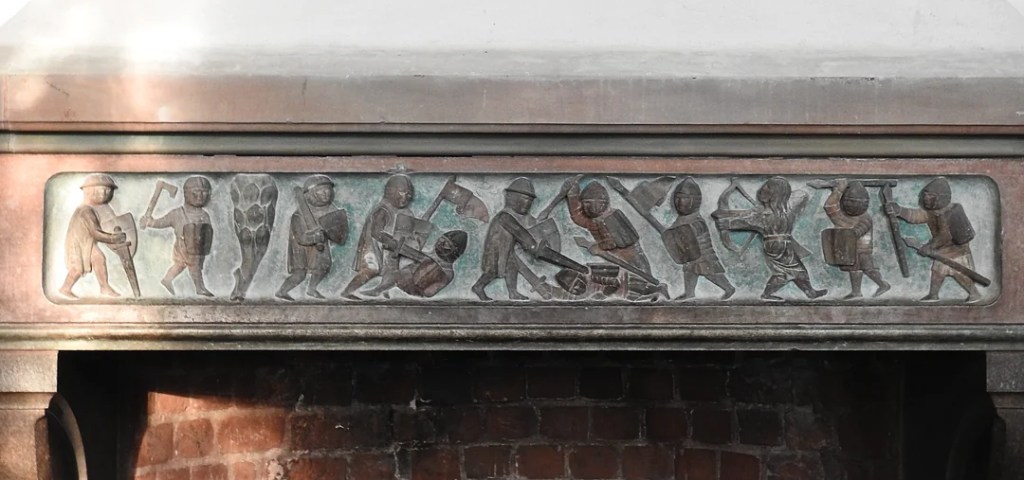
The Battle of Durbe opens with the Lithuanian light cavalry testing the Teutonic formation with javelins. Fleet of foot and much lighter than the heavy chargers of the Danish knights, the Lithuanian horses have no trouble even in the swampy terrain. At length, the pagan alliance advances on the much larger Teutonic force. As the two sides come close to clashing, the Teutonic army is dealt a severe blow before the first spear clatters against the first shield. Northern Curonians, on the right flank of the Teutonic army, break off and stand at a distance, where they simply watch the fighting unfold. Southern Curonians, on the pagan left, walk right past the Northerners unmolested and strike the exposed Teutonic flank. Over on the Teutonic left, the Estonians and Latgallians see their fellow Balts abandon the fight and quickly lose heart. Soon, they turn tail and flee the field, leaving the Semigallians free to strike the exposed Teutonic left flank.
The Danish and summer crusader knights, held in reserve until now, try to charge into the Semigallian rear, but they get stuck in a mud pit instead. Lithuanians and Semigallians surround and kill them all. Seeing this, the men-at-arms from Danish Estonia lose heart and flee, opening another gap for the pagan alliance to exploit.
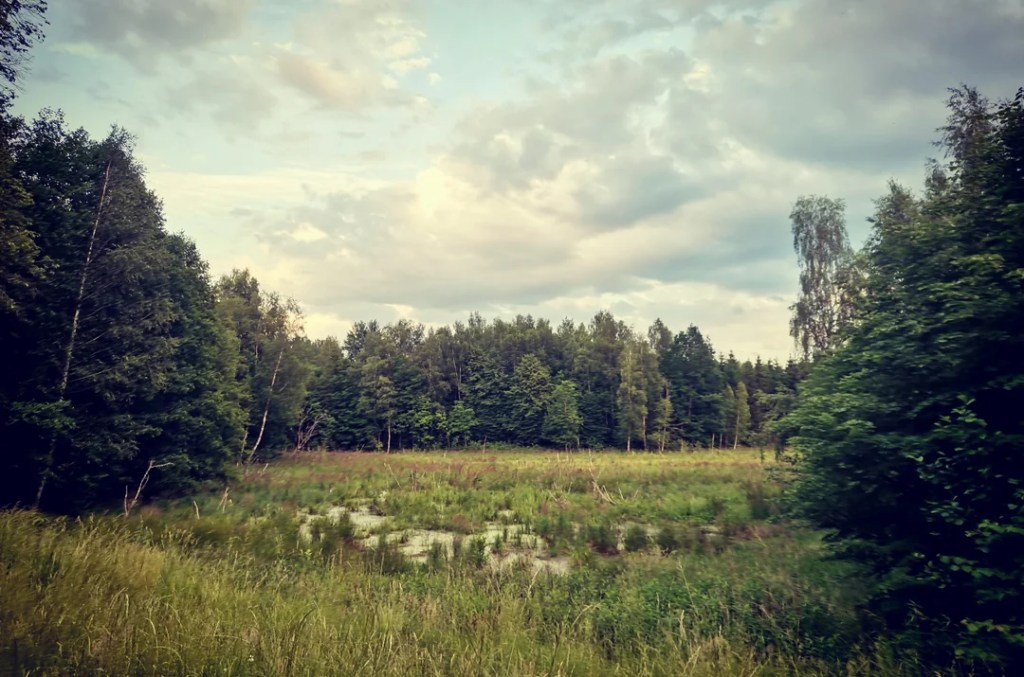
Then, at last, the men-at-arms from the Order and from Riga begin running, intending to melt into the countryside and disappear, but as they flee the Northern Curonians finally lurch forward—not toward the pagans, but toward the fleeing Christians, whom they slaughter to a man.
At the end, only the Teutonic knights are left. One hundred fifty brothers of the order stand back to back, completely surrounded by pagan warriors. One by one, they fall. Heinrich Botel and Burkhard von Hornhausen are struck down with their men. None are spared, not for mercy nor for ransom. Every Christian knight’s life is snuffed out. Alminas then has his men comb the bodies of the knights and slit every one of their throats just to be sure.
When at last the dust has settled, when all the bodies of the slain have been stripped of valuables and thrown in a pit, when every pagan’s injuries have been tended to, then the gates of Durbe are thrown open and the hostages handed over to their families. A reward well-deserved for a service flawlessly rendered.
At the end of that hot July day in 108, the Teutonic army has been destroyed, along with around half of all the knight-brothers of the Order in the Baltic. In the Battle of Durbe, the pagans have won a crushing victory so total no battle before it can compare. The disaster for the crusader cause cannot be overstated.
Nor can the elation at the victory when news of it spreads throughout pagan lands. Rejuvenating life pours into the heart of every pagan warrior and of every forced convert oppressed by Christian masters. Having switched sides, the Northern Curonians repudiate their conversion and openly practice paganism again while rebelling against the Livonians en masse with help from the Southerners. The Semigallians go home, rally their people, and lay siege to Doblen again while Samogitians tighten the noose on Georgenburg. Prussians gather their strength and march west to retake their lands. Even King Mindaugas renounces his new faith and reverts to paganism.
Everywhere, pagan hearts swell and wills fix on their goal. Arise, men of forest and swamp! Now is your time!
[Next]
Credits:
Battle relief via r/OldPrussia
Prussian maybe-swamp via r/OldPrussia

 Lord of Lore
Leave a comment