The Roman Empire—But Also Medieval Europe
It is summer, 100 AD. In the aftermath of the Battle of Novaesium, Trajan Augustus spends the rest of the summer and autumn campaigning against various smaller Holy Roman armies attacking Heathen Roman garrisons all along the Rhine, as well as the upper Danube. Trajan had believed that the defeat of William and death of Otto would strike fear into the hearts of the Christians and scatter them back to their side of the river, but he was wrong. Far from being afraid, the tale of Bishop Otto the Martyr spreads far and wide. Christians from all over Germany, Holland, Frisia, and Bohemia travel to the Rhine to participate in the crusade. At this stage, there are no more large crusading armies, but there are too many small ones for Trajan to handle effectively on his own. However, he cannot place too much military power in the hands of any of his subordinates, lest they gain the confidence to challenge Trajan for ultimate power. Therefore, Trajan takes stock of the men most loyal to him and promotes two of them to lead armies in his name: Publius Aelius Hadrianus—better known as Hadrian—and Lucius Iulius Ursus Servianus—or simply Servianus.
When the snows come, the river freezes over, and it becomes difficult to move large numbers of men around, the number of Christian raiders crossing the Rhine reduces to a trickle of small bands. Finally, Trajan has the chance to leave the frontier for a while. The augustus takes this opportunity to march his army to Rome, where he puts on a triumph. Ten thousand men selected from those who fought at Novaesium march through the city streets parading captured enemies and loot for all Romans to see. At the head of the loot train is the crucifix Bishop Otto paraded in front of his army before the Battle of Novaesium. After it come presentations of the armour and weapons used by the Christian barbarians. The triumph comes to a halt in front of the temple of Jupiter Optimus Maximus, where the captured crucifix is laid on the ground in front of the temple, with Jesus’ face in the muck. Thirty captured knights are strangled to death in honour of the King of the Gods—and to the thunderous applause of the watching crowd. Afterward, the crucifix is displayed inside the temple to show the power of Jupiter over Christ.
Follow me on Bluesky for updates (with teasers!):
Or subscribe to my newsletter to get updates via email:
Besides celebrating his triumph, Trajan also quells all dissent that has arisen in his absence. Rome commands a bureaucracy that keeps her empire running, and many powerful officials in that system have begun to question Trajan’s ability to rule. His reign is still young, and already he suffered a catastrophic defeat at the Battle Linter. Now, with his victories at Asciburgium and Novaesium under his belt, Trajan is able to silence his critics and even sends some of them off to unimportant posts in distant backwaters to keep them far from the levers of power.
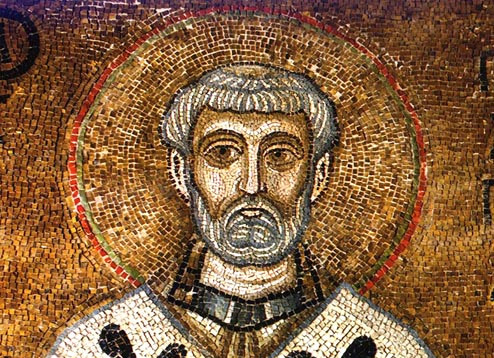
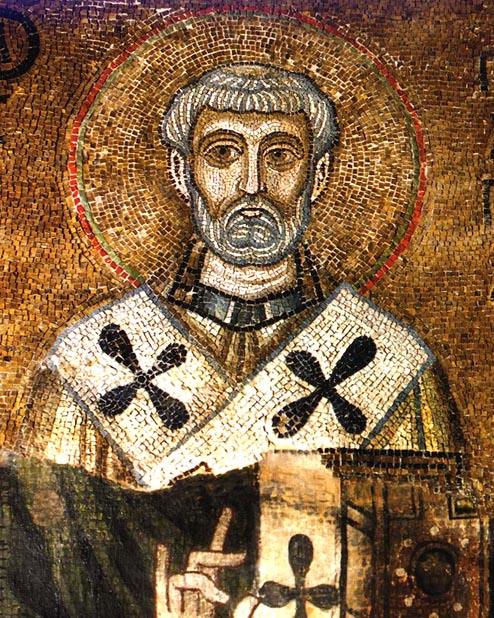
Following Trajan’s triumph, all known Christian leaders in the city are taken into custody by the Praetorian Guard, who beat them and torture them and demand that they offer sacrifices to Nerva Augustus. Those who refuse—which is almost all of them—are executed by various means, including burning at the stake and crucifixion. Among those executed is none other than the bishop of Rome himself, Clement. Clement is put on a boat and taken to the middle of the Tiber river, where he is tied to an anchor and thrown overboard. After waiting the allotted time, the anchor is pulled back up and Clement’s body is cast into the city dump—all while still wearing his bishop’s vestments. In all, seventy-seven Christian leaders are martyred in one day.
Clement’s execution and those of his fellow Roman Christians sends shockwaves throughout Christian communities all over the empire. In the aftermath of the executions, Trajan publishes a decree ordering all Christians to leave the city of Rome or face the same fate. News travels quickly by sea and land to all corners of Rome’s empire. Christians everywhere react with a great deal of emotion; however, the dominant emotion is not fear, as Trajan intends, but instead there is joy that seventy-seven Christians faced torture and death without flinching—seventy-seven who are now with Christ to receive just rewards for their faithful service. Far from trembling at the prospect of facing a similar fate, Christians across the empire harden their resolve. Apostles and bishops tell the tale of the Seventy and Seven in all the congregations from Hispania to Syria and even across the border in the Arsacid Empire—not to demotivate or demoralise their flocks, but to inspire similar faith in them. No talk of vengeance arises from such meetings. Instead, the persecuted saints follow Christ’s teachings to turn the other cheek, forgive those who persecute them, and pray for those who spitefully use them.
Years later, an anonymous account of the Seventy and Seven Martyrs will begin circulating, which details how each one endured the most agonising death imaginable without ever wavering in their faith. Framed as a collective letter sent by all the martyrs to the church as a whole, the Epistle of the Seventy and Seven Martyrs will eventually become treated as scripture by some churches.
Naturally, all this filters across the Rhine into the Holy Roman Empire. Catholics respond with similar church gatherings to tell the tale and inspire faith. In their case, however, faith is paired with holy wrath. Where the saints of the Great Assembly pray for their enemies, the Catholics gather for war. While the saints of the Great Assembly remind each other that Jesus told Peter the Apostle to put his sword away when the latter attempted to defend him, the Catholics call for crusade. When the saints of the Great Assembly recite the teaching of the Lord that “my kingdom is not of this world”, the Catholics speak of conquering Heathen lands and cry “Deus Vult!”
From this, one might deduce that the Christians of 98 AD and those of 1250 AD may have had some slight differences of opinion. If you, dear reader, picked up on that, then you must be congratulated. Indeed, in the twilight of the 1st century, Christianity is almost unrecognisable to the people of 1250. Many Christians don’t even use that name for themselves, instead preferring saint, as Paul the Apostle addressed Christians in his letters, or Nazerene for Nazareth, the place where Jesus grew up. The Christian church as a whole is often known as the Great Assembly, and this is what we will call these Christians in order to distinguish them from the Christians introduced to this timeline by the Act of God. Within the Great Assembly, it must be said that there are many, many lesser assemblies. Broadly speaking, these can be divided into two camps: Jewish Christians, who believe that the whole Law of Moses (with the exception of animal sacrifices) must be followed in order to be a true disciple of Christ, and Gentile Christians, who follow Paul the Apostle’s teaching that things like circumcision and dietary restrictions no longer apply.
However, within these camps there are endless divisions, with people proclaiming themselves disciples of Paul, or of John, or James, of Barnabas or Simon Magus, and the list goes on. Some draw a distinction between Jesus, who was a mortal man, and the divine being known as Christ, while others say these two are one and the same—or that they began separate, but became one. Many read the Sibylline Oracles—a group of mixed pagan and Jewish prophetic documents—alongside the epistles of Paul and the gospels. There are even those who add God and Jesus to the pantheon of Roman gods, worshipping God as the supreme deity with Jupiter as his viceroy and Jesus as a demi-god equal the likes of Hercules.
We need not get into a lengthy discussion of all the near-infinitely diverse sects of the Great Assembly at the turn of the 2nd century. Suffice to say that there is no settled canon of scripture and there are no universally-agreed doctrines. Almost everything is up for debate except for the crucifixion. While these debates are often heated, there nevertheless remains a great deal of room for disagreement. Space is made for discussion and debate rather than a central authority (which does not exist) imposing a strict dogma and branding dissenters as heretics. In some instances, of course, these groups do denounce each other as un-Christian, as the Gentile Christians and Jewish Christians do to each other, and as both of them do to anyone who accepts both Christ and the Greco-Roman pantheon, so there are limits to open and free debate.
Across the Rhine, by contrast, there is indeed a central authority. This authority long ago agreed upon a canon of scripture and collects church tradition to use as precedent alongside it. For the Catholic Church, there is little space for debate. On a range of topics considered to be too important for disagreement to be allowed to enter the picture, those who question dogma are cast out, often persecuted, and sometimes executed for espousing undesirable opinions.
Furthermore, this is not simply the Catholic Church, but the Catholic Church of a particular era, namely, the crusading era. Waging holy war upon those who disagree with Catholic dogma is not only a duty, but a sacrosanct rite, one so important as to merit forgiveness of sins for those who carry it out.
And so it is that when William of Holland calls upon Henry I van Vianden, bishop of Utrecht, to preach another crusade in the name of punishing the Heathens for the killing of the Seventy and Seven, saints of the Great Assembly who have already settled in the Holy Roman Empire are horrified. This, they argue, is not what Clement would’ve wanted. However, their voices are few and easily drowned out. Once again, thousands answer the call to arms. Although Henry is a prince-bishop much like Otto was, he has no intention of leading an army himself; instead, he urges everyone to go to the Hague to follow William. Last time, 28,000 men split into two armies following William and Otto, but this time 34,000 men will march under the banner of William of Holland in a united army, with Henry by William’s side.
Meanwhile, across the Danube River and far to the east, another Christian’s heart is pricked by the tale of the Seventy and Seven. Sartaq, son of Batu Khan of the Golden Horde, prepares a scourge to punish the unrighteous Heathens for their evil deeds.
[Next]


 Lord of Lore
Leave a reply to Reginald Bacon, KoKG3 Cancel reply