It is September, 108 AD. We turn back the clock and go to Semigallia to see why the Livonian Order and the Archbishop of Riga were unable to send any aid to von Lützelburg, the poor beleaguered Bishop of Courland. Immediately after the Battle of Durbe, the Semigallians returned home, where the whole of the Semigallian people rose up against the Livonian Order under their war leader Nameitis. Doblen, the main Livonian fortress in Semigallia, is placed under siege. Previous Semigallian attempts to take the castle by storm failed, so this time they follow the same pattern as Balts elsewhere in building a ring of forts around the castle and sitting back to wait for the garrison to starve.
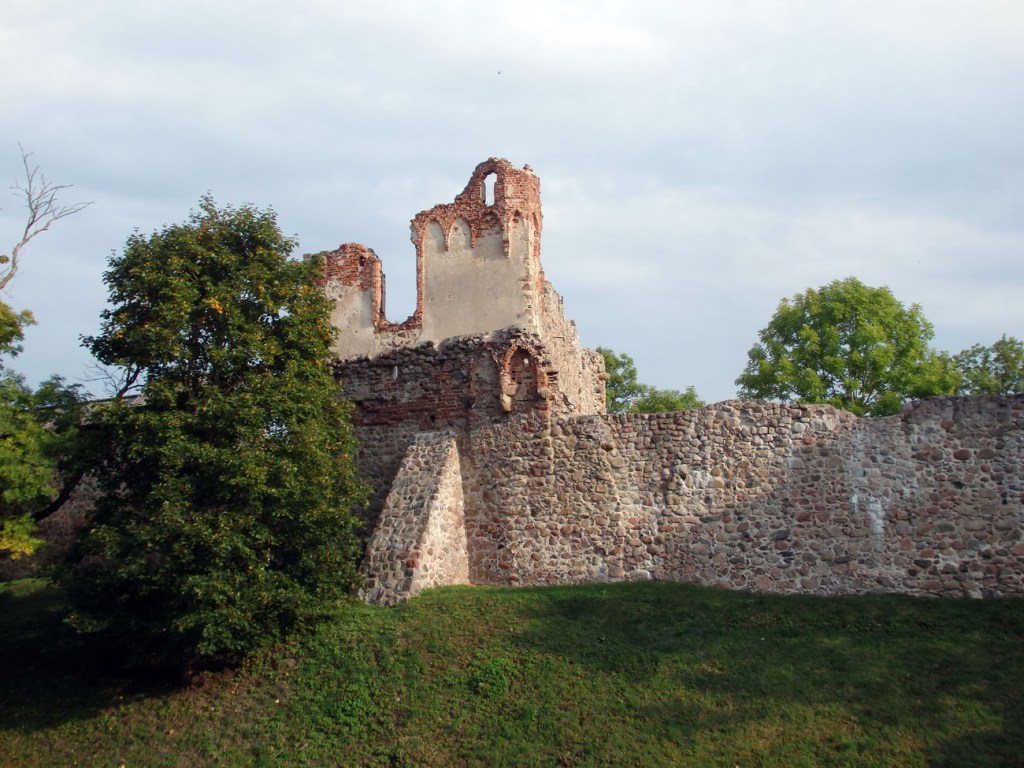
Although Doblen isn’t an especially large castle, it’s a formidable fortress by Baltic standards. Semigallians know it as Dobele, which is the name of a fort that used to occupy the same space. Dobele withstood many sieges before eventually being abandoned and subsequently destroyed by the Livonians to make way for their own castle. It stands atop a man-made hill overlooking the Bērze River, a rather minor tributary of the somewhat larger Svēte River. Thankfully for the Semigallians, neither river is deep enough for large vessels, so a palisade along the Bērze’s banks manned by archers is enough to ward off whatever small boats might try to resupply the garrison. The castle consists of a wall surrounding a keep and a barracks, all of them made of boulders and bricks, as well as a large bailey.
Tip me on Ko-Fi: https://ko-fi.com/lordoflore
Follow me on Bluesky for updates (with teasers!): @lord-of-lore.bsky.social
Or subscribe to my newsletter to get updates via email:
A hundred men and a single Livonian knight garrison the castle, but several hundred people from the town outside the walls flee inside when the Semigallians arrive, adding another 150 impromptu militia to the garrison. As others flee inside the castle, a single man on horseback gallops out of it, heading for Riga to call for reinforcements. Nameitis has brought 2,000 men to the siege, split between three small ringforts within sight of Doblen.
As the months go by, The castle’s storehouse slowly empties and those within the walls wonder if the messenger even made it through. Spirits are lifted in April, however, when a messenger arrives from Riga, sneaking through the Semigallian lines at night, to inform the garrison that an army is being prepared and will arrive in May.
Indeed, the army is already forming on the banks of the Daugava River, opposite Riga. Riga is an ancient city once belonging to the indigenous Livs, but now jointly controlled by both Archbishop Albert Suerbeer and the Livonian Order. Although the Archbishop and the Order often cooperate on fighting pagans, they equally often feud with each other (though this feuding has never quite reached the point of fighting each other on the battlefield). Consequently, few of the Archbishop’s men were at Durbe, and so his army is relatively unscathed, unlike the devastated Livonian Order. Suerbeer offers men to help relieve Doblen, but the new Master of Livonia, Werner von Breithausen, declines. Breithausen knows he’ll need to make political concessions to secure such help, and he isn’t prepared to do that. Instead, he strips men from garrisons all over Livonian lands in order to muster up an army of 2,000 men, whom he leads into Semigallia at the beginning of May.
Semigallian scouts, ranging far afield of their siege forts to give early warning of enemy armies approaching, spot the Livonians coming and warn Nameitis. Leaving 600 men to keep up the siege, Nameitis takes the remainder down the Svēte River to place where the forest presses up very close to the road that Breithausen must take to reach Doblen. Latvia, after all, is one of the most heavily forested parts of Europe; the forests here are ancient and dense, making it easy for men who know their way around to find a place to hide a whole army. Hiding in the woods, the Semigallians wait for the Livonians to come close. Few knight-brothers grace this group, since there aren’t that many left after Durbe. Many of the experienced men-at-arms are gone as well, so this army is largely made up of untested new recruits and poorly-equipped Latgallian levies.
Now, the Livonians aren’t stupid; they know to check a forest when it comes so close to the road, and that’s exactly what a detachment of light cavalry does. Before they know what’s happening, however, a flurry of arrows comes out of the treeline at them, felling half of them in an instant. Then the Semigallians charge out of the forest. Overrunning the light cavalry barely slows them down, and they keep charging for the main army. The more experienced knights and men-at-arms present quickly form up and are ready to receive the charge before it arrives, but the Latgallian levies are still running around in a panic when the Semigallians loose another flurry of arrows on them. Terrified, the Latgallians stare into the face of the coming charge, and it’s too much for them. Before the charge connects, the Latgallians flee the field, many dropping their weapons so as to run faster. Master Breithausen is in the thick of the battle with his knights and is wounded three times as he leads a fighting retreat. Several more brothers and two hundred of the Order’s finest remaining men-at-arms are killed, while the rest are able to escape, including Breithausen.
Returning in shame to Riga, Breithausen rethinks the situation. Before he can launch another campaign, he’ll need to recruit more men, and for that he needs money. Taxes are raised to pay for a new army, and as always, the cost of paying them is passed on down the line to those at the very bottom of the social hierarchy.
In the Order’s eastern territories, the lands that once belonged to the Latgallian principalities of Jersika and Tālava, trouble is brewing. News of the defeat arrives with the Latgallian deserters from the Battle of the Svēte. So many knights are dead and all the castles in Latgallia have been stripped to skeleton crews. For some Latgallians, this is the perfect opportunity.
Ever since the early 13th century, the Germans have taken Latgallian forts and turned them into German castles; they’ve taken Latgallian towns and made them German; they’ve taken Latgallian lands and given them to German lords and churchmen. Latgallians allied with the crusaders early on, and their reward has been to become an underclass of subsistence farmers in their own lands while Germans own the large estates and take all the political and church offices worthy of note.
The Latgallian rebellion erupts everywhere at once. Bands of men begin roving the countryside looking to kill nobles and monks. Some of them served in the levy and have spears, shields, and armour, but most are simple peasants wielding the tools of their trade: scythes, billhooks, flails, and hunting bows. Unlike in other parts of the Baltic, however, the Latgallians don’t renounce their faith, or at least most of them don’t. This is a political revolt against the lords and churchmen to whom the Latgallians must pay a portion of every harvest for the privilege of being allowed to continue farming on the land their ancestors have farmed since time immemorial. And now they demand more. More! No, says the Latgallian farmer. The Livonians and the Archbishop’s men will pay.
A number of castles fall quickly before anyone knows a revolt has even started. In several cases, peasants flee inside a castle, pretending to seek refuge, only to kill the guards and open the gates for their comrades to come flooding in. This is how Rositten Castle is captured, which the Latgallians call Rēzekne, after the name of a Latgallian fort that once occupied the site. Now in command of a castle, the leader of the band who captured it begins styling himself as Vaitvaldis I, Prince of Latgallia.
Nameitis, meanwhile, is unaware of the Latgallian rebellion. He simply returns to the Siege of Doblen carrying the body of a knight killed in the Battle of the Svēte, which he has lifted up on a spear in view of the defenders of Doblen and tell them that their relief army won’t be coming. Demoralised, the defenders of Doblen hold out for another month. With their storehouse almost empty and all hope of relief now faded, the defenders finally surrender, and Nameitis allows them to leave with their weapons, but requires them to hand over their horses and armour. They agree and leave Doblen to the Semigallians in June, 109.
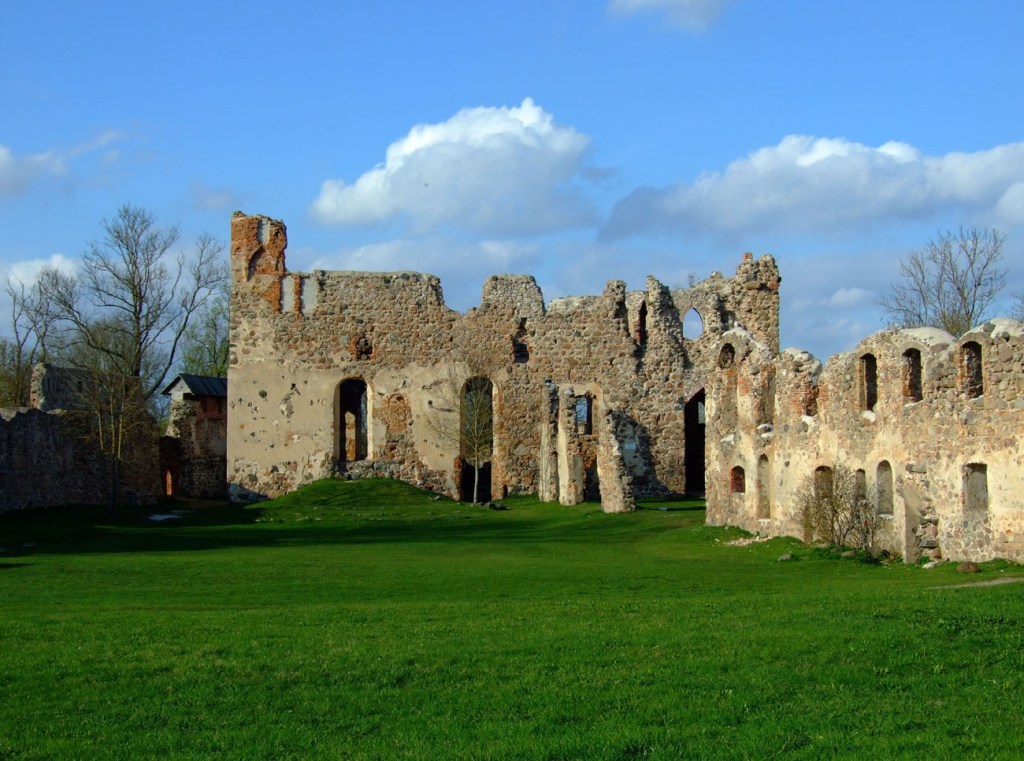
Following the capture of Doblen (now Dobele) Castle, the Semigallians also capture the old hillfort of Bauska and advance into Livonian territory almost to the Gulf of Riga. In the summer of 110, they launch a raid that razes the suburbs of Riga.
[Next]
Credits
Pictures of Dobele/Doblen Castle via medievalheritage.eu


Leave a Reply